Learning Outcomes
i. Define the skeletal system and its primary components: bone and cartilage.
ii. Distinguish between the properties and functions of bone and cartilage.
iii. Recognize the importance of both bone and cartilage in providing structural support and flexibility to the body.
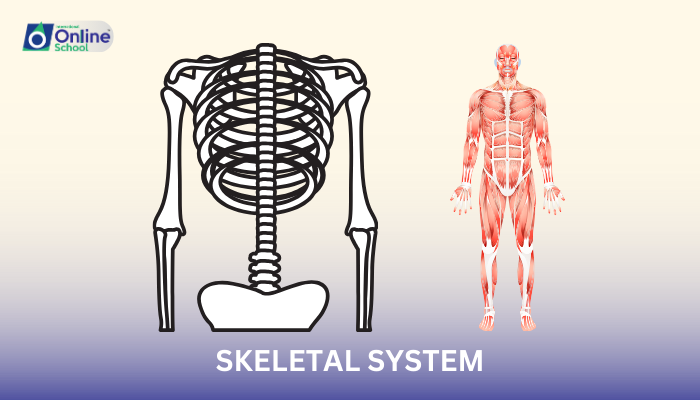
i. The Skeletal System: The skeletal system consists of bones and cartilage that support the body's structure, protect internal organs, and facilitate movement through articulations and attachment points for muscles.
ii. Bone vs. Cartilage
Bone: A hard, dense connective tissue that forms the majority of the adult skeleton. Bones function to support the body, protect vital organs, store minerals like calcium and phosphorus, and produce blood cells within the bone marrow.
Properties: Composed primarily of collagen and calcium phosphate, bones are strong and rigid, capable of withstanding compression forces.
Functions: Bones provide leverage for muscles, thereby enabling movement. They also serve as reservoirs for minerals and play a role in homeostasis.
Cartilage: A semi-rigid form of connective tissue, providing more flexibility than bone. It is found in areas requiring support and cushioning, such as joints, the rib cage, ear, and nose.
Properties: Cartilage is made up of chondrocytes embedded in a matrix of collagen fibers and proteoglycans, giving it tensile strength and elasticity.
Functions: Cartilage reduces friction in joints, serves as a shock absorber, and provides structural support for softer tissues.
iii. Roles in the Body's Structural Framework
Structural Support: Bones form the framework of the body, maintaining its shape and providing the rigid structure necessary for movement.
Flexibility and Shock Absorption: Cartilage ensures joints can move smoothly and flexibly, absorbs shock in weight-bearing joints, and connects bones together while still allowing for growth and repair.
In conclusion, the skeletal system, composed of both bone and cartilage, provides the essential functions of structural support, movement, and protection. Understanding the distinct properties and roles of bone and cartilage is crucial for appreciating how the body maintains its structure and adapts to physical stresses. This foundation is essential for further studies into the complexities of human anatomy and physiology.
